The growth of IPTV in the UK has brought convenience to millions of households. And next to that a steady stream of scams made to take advantage of that popularity. Some scams are obvious once you know what to look for. Others are clever enough to trick careful, tech‑savvy buyers. This guide goes over the common IPTV scams that are targeting UK consumers right now the clear warning signs, for each one and what to do if you think you have already fallen for one.
Why IPTV Scams Have Become So Common
IPTV sits in an unusual position that makes it particularly attractive to scammers: genuine demand is high, the technology is unfamiliar enough that many buyers can’t easily evaluate what they’re being sold, and the line between “legitimate but affordable” and “too good to be true” isn’t obvious to someone new to the space. Add to that the fact that payment often happens entirely online with no physical product or in-person interaction, and you have conditions that scammers have been quick to exploit.
Scam 1: The Vanishing Provider
This is the single most common complaint among UK IPTV subscribers. A provider takes payment — sometimes for a full year upfront at a heavily discounted rate — and then simply disappears within weeks or months, taking the remaining subscription value with it. Sometimes this happens because the underlying content sources get shut down by enforcement action; sometimes it’s a deliberate short-term operation designed to collect as many upfront payments as possible before closing down and reopening under a new name.
Warning signs: Aggressive discounting for long-term upfront commitments, no verifiable business registration, and a payment process that only accepts irreversible methods like cryptocurrency or direct bank transfer.
How to avoid it: Favour rolling monthly billing over large upfront payments where possible, especially with a provider you haven’t used before. Pay via card or PayPal where you retain some dispute protection, and verify business registration details before committing to anything beyond a short trial period.
Scam 2: Fake “Official” Reseller Pages
Because legitimate IPTV providers do run genuine reseller and affiliate programmes, scammers have started building convincing fake reseller or affiliate pages that mimic real providers, collecting payment for subscriptions that never actually get activated, or activating a low-quality unofficial stream instead of the genuine service being advertised.
Warning signs: A reseller page with a URL that’s slightly different from the official provider’s domain, unusually aggressive pricing compared to the provider’s own direct pricing, and payment processed through a third-party link rather than the provider’s actual checkout system.
How to avoid it: When considering a reseller arrangement, verify it directly against the provider’s own official channels first. A genuine, provider-run reseller programme will be clearly linked from the provider’s own official website, not something you stumble across through an unsolicited social media message or a domain that only loosely resembles the real one.
Scam 3: The Free Trial That Requires Full Card Details Upfront
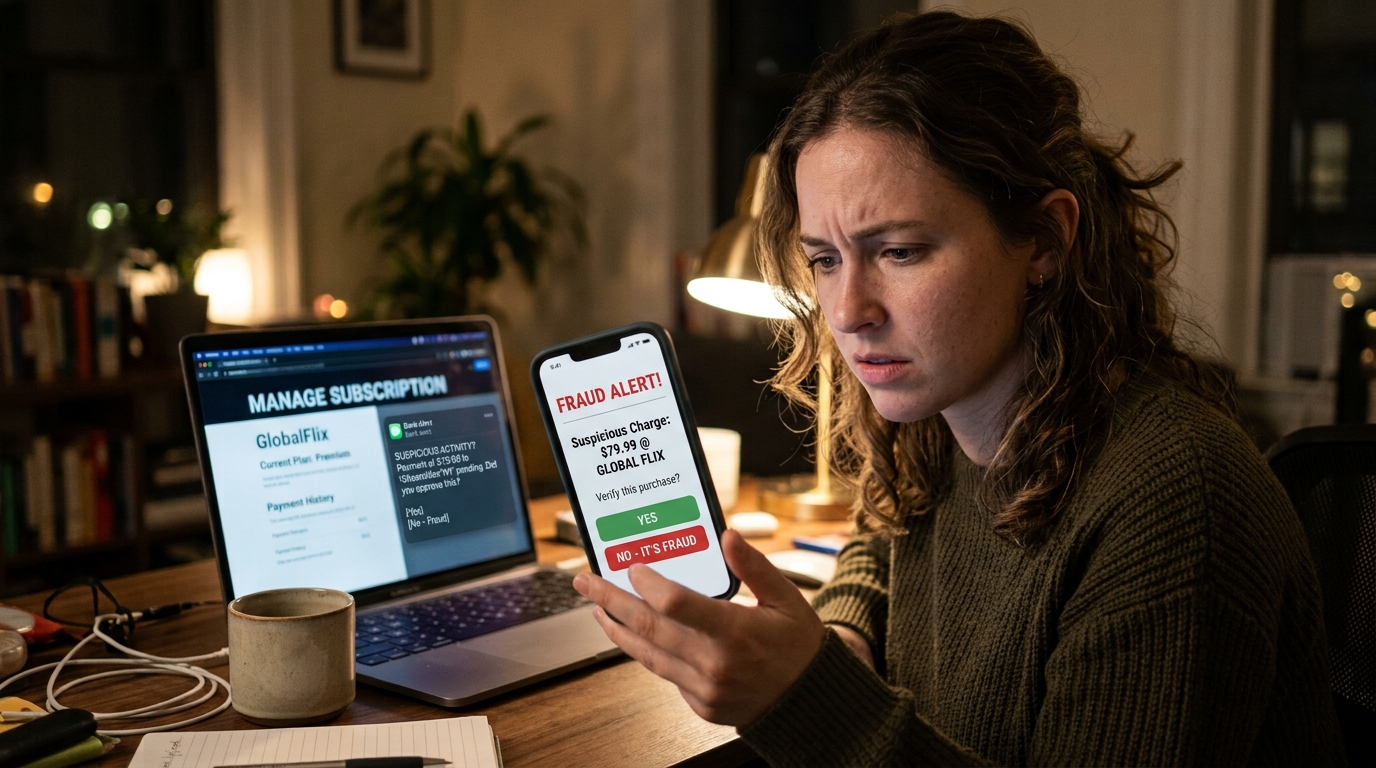
A legitimate free trial is a reasonable way to test a service. A scam version of this asks for full card details upfront under the guise of a “free” trial, then either charges immediately despite promising otherwise, or enrols you in a recurring subscription that’s deliberately difficult to cancel.
Warning signs: A “free” trial that still requires full payment card details rather than a no-payment-needed sign-up, unclear or buried cancellation terms, and a subscription that auto-renews at a significantly higher price than the trial suggested.
How to avoid it: Read the cancellation terms before entering any payment details, even for a trial. If a provider won’t clearly state how to cancel before you sign up, treat that as a signal in itself.
Scam 4: Fake Streaming Apps on Third-Party App Stores
Because official app stores have tightened restrictions around unauthorised streaming apps, some scammers distribute fake IPTV apps through third-party app stores or direct APK downloads, sometimes bundling malware alongside a non-functional or fake streaming interface.
Warning signs: An app sourced from outside official app stores, requests for excessive device permissions unrelated to video playback, and an app with no verifiable developer information or reviews.
How to avoid it: Stick to apps distributed through official app stores or directly through a verified provider’s own website with clear installation instructions. Be especially cautious of apps promoted primarily through social media ads or unsolicited messages rather than a provider’s own official channels.
Scam 5: Social Media and Marketplace Impersonation
Scammers frequently set up fake social media accounts or online marketplace listings impersonating well-known or search-popular IPTV providers, using near-identical branding to intercept customers who are searching for the genuine service.
Warning signs: An account with a recently created profile despite claiming to represent an established provider, a marketplace listing with no verifiable seller history, and communication that pushes urgency — “limited spots,” “price goes up tomorrow” — to rush a purchase decision before you can properly check it out.
How to avoid it: Always navigate to a provider’s official website directly rather than clicking through from a social media ad or marketplace listing, and cross-check any account claiming to represent a provider against the provider’s own verified channels.
Scam 6: The “Lifetime Subscription” Offer
Genuine ongoing content licensing costs money indefinitely — there’s no realistic way for a provider to offer truly unlimited lifetime access to premium, continuously licensed content for a single one-off payment. “Lifetime” IPTV offers are almost always either a scam designed purely to collect a larger one-off payment before disappearing, or a heavily time-limited offer with vague fine print that doesn’t actually mean what “lifetime” implies.
Warning signs: Any offer using the word “lifetime” for ongoing premium content access, particularly at a price that wouldn’t cover even a single year of realistic licensing costs.
How to avoid it: Treat “lifetime” claims as an automatic red flag rather than a genuine bargain, and stick to providers offering standard, transparent recurring billing instead.
Scam 7: Phishing Disguised as Account or Billing Issues
Once a scammer has your email address or phone number from a previous interaction, a common follow-up scam involves fake “your subscription has expired” or “billing issue” messages designed to steal payment details through a convincing but fraudulent login or payment page.
Warning signs: Unexpected billing or account emails with urgent language, links that don’t lead to the provider’s actual official domain when you hover over or check them, and requests to re-enter full card details for an account that should already have payment on file.
How to avoid it: Never click through a billing or account email link directly — instead, log into your account by navigating to the provider’s official website manually and checking your account status there.
What to Do If You Think You’ve Been Scammed

If you believe you’ve paid for a service that’s fraudulent or has disappeared, a few practical steps help:
- Contact your bank or card provider immediately to dispute the charge, particularly if payment was made by card, since this offers meaningfully better protection than bank transfers or cryptocurrency.
- Report the scam to Action Fraud, the UK’s national reporting centre for fraud and cybercrime, even if you’re not confident it will be individually investigated — reports contribute to broader pattern detection against repeat offenders.
- Change any passwords reused across other accounts, particularly if you provided login credentials as part of the scam.
- Document everything — screenshots of the offer, payment confirmations, and any communication — in case you need it for a dispute or report later.
How to Protect Yourself Going Forward
The patterns across nearly all of these scams point toward the same underlying protections: favour rolling billing over large upfront payments with unfamiliar providers, pay through methods that offer dispute protection, verify business legitimacy before committing, and treat unrealistic pricing or “lifetime” offers as signals rather than genuine bargains. Choosing a transparent, properly licensed subscription from a provider with verifiable business details from the outset avoids the vast majority of these scam patterns entirely, since scammers specifically thrive in the gap left by anonymous, unaccountable operations.
Frequently Asked Questions
Is it safe to pay for IPTV using cryptocurrency? It’s generally lower protection than card payment, since cryptocurrency transactions are typically irreversible with no dispute mechanism if something goes wrong.
Are “lifetime” IPTV deals ever genuine? Realistically, no — ongoing content licensing costs money continuously, so a genuine unlimited lifetime offer at a low one-off price isn’t commercially sustainable for a legitimate provider.
How can I verify an IPTV provider is a real registered business? Check for a registered company name and look it up on Companies House, and confirm the provider has verifiable, consistent contact details across its official channels.
What should I do if a “free trial” asks for full card details? Read the cancellation terms carefully before proceeding, and be cautious if the provider isn’t upfront about exactly when and how much you’ll be charged if you don’t cancel.
Can I get my money back if an IPTV provider disappears? It depends on your payment method — card payments generally offer the best chance of a successful dispute through your bank, while bank transfers and cryptocurrency payments offer little to no recourse.
Final Thoughts
Most IPTV scams in the UK follow recognisable patterns once you know what to look for: unrealistic pricing, pressure toward large upfront payments, vague or unverifiable business details, and offers that sound too good to reflect genuine content licensing costs. Taking a few minutes to check a provider against these patterns before subscribing is a small amount of effort that avoids the much larger cost — financial and otherwise — of falling for one of these schemes.
This article is for informational purposes only and does not constitute legal or financial advice. If you believe you’ve been the victim of fraud, contact Action Fraud and your bank or card provider directly.