
If you’ve ever had an IPTV stream freeze or drop out at the exact moment a match got interesting, there’s a good chance the cause wasn’t your internet at all. It was a UK court order, quietly enforced by your own internet provider. Site-blocking has become one of the most misunderstood parts of the UK streaming landscape, partly because it operates almost entirely out of public view. This guide explains exactly how it works, who’s behind it, and what it actually means for anyone streaming IPTV in the UK.
What UK Site-Blocking Actually Is
Unlike some other countries, the UK doesn’t have a single, publicly branded national blocking system. The UK has a way to block websites that’s already part of the law. This law is called the Copyright, Designs and Patents Act 1988. It has a part called Section 97A. This Section 97A lets companies, like film studios and record labels go to the High Court. They can ask the High Court to stop internet service providers from letting people visit websites or internet addresses. These websites or internet addresses are the ones that help people break copyright laws. For example the Premier League can do this if someone is using their games without permission. The UK site-blocking uses this Section 97A of the Copyright, Designs and Patents Act 1988 to stop people from visiting these websites.
This mechanism has existed in some form for well over a decade, and hundreds of individual sites have been blocked through it over the years, alongside thousands of proxies and mirror sites that spring up to work around each block. What’s changed more recently is the scale and speed of enforcement — modern blocking orders, particularly the “dynamic” orders used for live sport, can now update in near real time during a match itself, rather than applying a single static list agreed months in advance.
Who Actually Enforces These Blocks

It’s a common misconception that Ofcom directly runs or operates UK site-blocking. It doesn’t. The process works through the courts, not the regulator:
- A rights holder (for example, the Premier League, or a film studio) identifies infringing sources distributing its content without authorisation.
- It applies to the High Court for a blocking injunction under Section 97A.
- If granted, the order requires the UK’s major broadband ISPs — commonly BT, EE, Plusnet, Virgin Media, Sky Broadband, and TalkTalk — to block customer access to the specified websites or IP addresses.
- For live sport specifically, courts have granted dynamic blocking orders, which allow rights holders to update the list of blocked IP addresses throughout a live event as unauthorised streams move between servers to try to evade the block.
Ofcom’s role is separate and much narrower: it regulates broadcasting standards and, following the Media Act 2024, has been given expanded powers over on-demand and streaming platform content standards — things like accuracy, fairness, and accessibility for services such as Netflix, Prime Video, and Disney+. This is a completely different function from copyright site-blocking, which sits with the courts and ISPs, not Ofcom directly.
Why This Matters for IPTV Streamers Specifically
For anyone using an IPTV service, this legal mechanism explains a pattern that otherwise seems confusing: a stream that worked flawlessly last week suddenly buffers or drops entirely this week, with no obvious change to your home setup.
If an IPTV provider is distributing content without the proper rights, the servers or IP addresses it relies on can become targets of these blocking orders. Because dynamic orders update during live events, a stream can be running perfectly in the first half of a match and be blocked by the second half, once the specific IP address in use gets added to the live block list. This is an ISP-level block being enforced under a legal instruction — not a technical fault with your router, your device, or your broadband speed, and no amount of troubleshooting on your end will fix it.
The Scope Has Expanded Beyond Just Piracy Sites
One detail worth knowing is that this blocking infrastructure, originally built almost entirely around piracy enforcement, has been used more broadly over time. Beyond film, music, and sports piracy — still by far the largest category — court-ordered and regulatory blocking in the UK has extended into other areas too, including certain gambling sites and other restricted categories. ISPs generally implement these blocks without detailed public disclosure of exactly what’s on any given list at any given time, which is part of why the whole system can feel opaque from the outside.
This lack of visibility has drawn criticism from digital rights groups, who point out that blocking measures can occasionally catch legitimate sites that happen to share server infrastructure with a targeted service — a known limitation of IP-based blocking rather than domain-specific blocking. It’s a genuine trade-off inherent to how this enforcement works, and one that’s been raised in policy discussions around the world, not just in the UK.
How This Compares to Other Countries
It’s worth briefly noting that other countries take different approaches, partly because it clears up a common point of confusion. Italy, for example, operates a scheme called Piracy Shield, launched by its media regulator AGCOM, which goes further than the UK model by requiring infrastructure providers — including DNS resolvers and CDN companies — to disable resolution for flagged domains within a very tight window, sometimes as little as 30 minutes. This has proven controversial, with major infrastructure providers pushing back on the technical demands and reporting cases of legitimate sites being caught up in blocks due to shared infrastructure.
The UK’s approach, by contrast, works through court injunctions directed specifically at consumer-facing ISPs rather than infrastructure-level providers like DNS resolvers or CDNs, though there’s ongoing industry discussion about whether that scope should expand. If you’ve seen references to “Piracy Shield” in relation to the UK, it’s worth knowing that’s actually describing Italy’s system — the UK doesn’t currently operate anything with that specific name or scope, even though the underlying goal (stopping unauthorised streaming) is similar.
What This Means Practically for UK Viewers
If you’re using a properly licensed IPTV service or official streaming platform, none of this affects you. Blocking orders target specific infringing sources, not legitimate rights-holding services — so your stream simply isn’t part of what’s being blocked in the first place.
If you’re using an unlicensed IPTV provider, this is the structural reason behind the matchday buffering and drop-outs so many users report. It’s not a coincidence that these issues cluster specifically around live sport — that’s exactly where dynamic blocking orders are most actively and frequently updated.
Using a VPN doesn’t solve the underlying issue. Some viewers try routing around blocks with a VPN, but this doesn’t change the legal status of the content being accessed, and it introduces its own latency, which can make buffering worse rather than better. It’s a workaround for a symptom, not a fix for the actual cause.
How to Tell If Buffering Is Blocking-Related
A few patterns are fairly reliable indicators that what you’re experiencing is tied to enforcement rather than a simple connectivity issue:
- The problem is specific to live sport, particularly Premier League matches, rather than general streaming.
- It gets noticeably worse as a match progresses, especially in the second half, consistent with dynamic list updates happening mid-event.
- Other apps and websites on the same connection work completely normally, ruling out a general broadband issue.
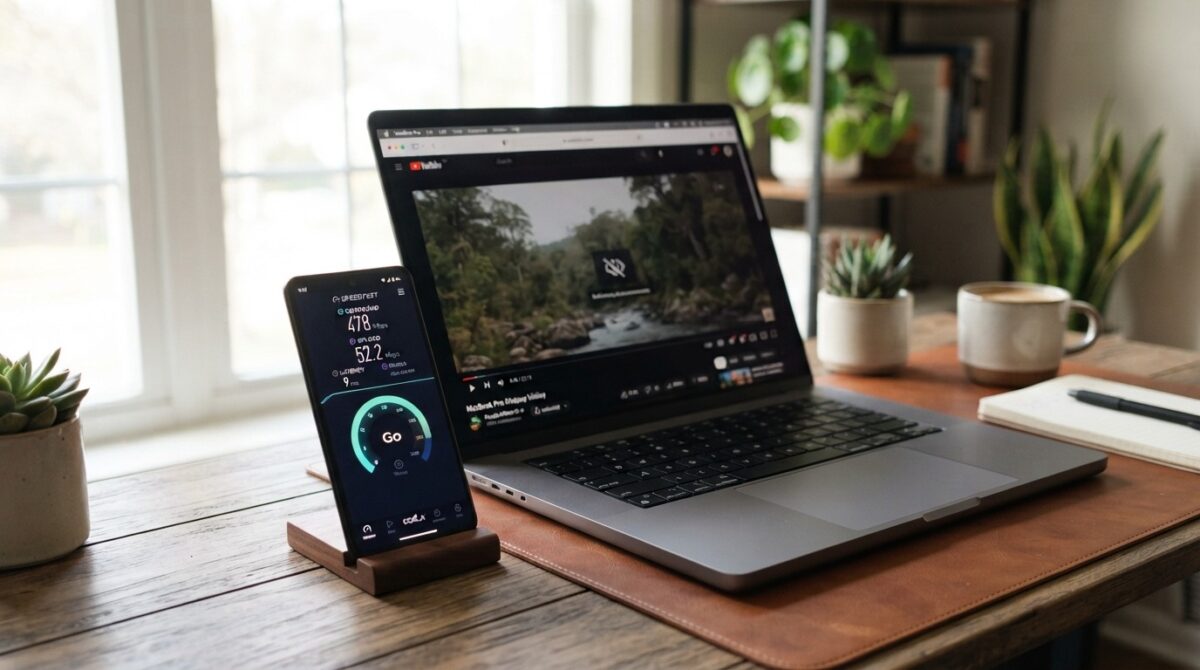
- A speed test shows your connection is performing fine, which points away from bandwidth as the cause.
If most or all of these apply, the most likely explanation isn’t your home setup at all — it’s the source of the stream itself.
The Long-Term Trend
Enforcement in this area has become more sophisticated and more frequently updated over recent years, not less. Courts have continued to grant increasingly flexible blocking orders to rights holders, and industry discussion continues around whether the scope of who can be compelled to block — potentially extending to infrastructure providers beyond consumer ISPs — should expand further, following the direction some other countries have already taken.
For UK viewers, the practical implication is straightforward: streams relying on unauthorised distribution are likely to become a progressively less reliable way to watch live sport, not a more reliable one, regardless of how good a home broadband connection is. The only route that sits entirely outside this enforcement is a genuinely licensed subscription with proper broadcasting rights, since blocking orders are, by design, aimed at sources that don’t have them.
Frequently Asked Questions
Does Ofcom run UK site-blocking? No. Site-blocking in the UK operates through High Court injunctions under Section 97A of the Copyright, Designs and Patents Act, enforced by ISPs. Ofcom’s role covers separate areas, including broadcasting and streaming platform content standards.
Is “Piracy Shield” a UK scheme? No — Piracy Shield is Italy’s system, run by AGCOM, and works differently from the UK’s court-order model. The UK doesn’t currently operate a scheme with that name.
Why does my stream only buffer during live matches? Dynamic blocking orders used for live sport update the list of blocked IP addresses throughout the event itself, which is why buffering tied to blocking tends to cluster specifically around live matches rather than general streaming.
Will a VPN stop my stream from being blocked? Not reliably. A VPN doesn’t change the legal status of the content, and it can add latency that makes buffering worse rather than better.
Which ISPs are subject to these blocking orders? The UK’s major broadband providers — including BT, EE, Plusnet, Virgin Media, Sky Broadband, and TalkTalk — are commonly named in these court orders and required to implement the resulting blocks.
Final Thoughts
UK site-blocking isn’t the mysterious, arbitrary process it can feel like from a viewer’s chair — it’s a well-established legal mechanism, tightly focused on requiring ISPs to block infringing sources under court order, and increasingly updated in real time during live sport. Understanding how it actually works clears up a lot of confusion around matchday buffering, and makes the case for properly licensed streaming pretty straightforward: it’s the one option that was never a target of any of this in the first place.
This article is for informational purposes only and does not constitute legal advice. For the current legal position, consult the UK Intellectual Property Office or a qualified UK solicitor.